The quick answer
For everyday memory and focus, a stimulant-free formula is often the smarter long-term choice. Caffeine gives you a fast lift, but it borrows energy you pay back later in jitters, crashes or poor sleep, and it does nothing to nourish memory itself. Caffeine-free formulas built on nutrients like L-Arginine, L-Citrulline and B vitamins work more quietly, supporting circulation and cellular energy day after day. The trade-off is patience: they build over weeks instead of minutes.
Walk down any supplement aisle and you will notice that many "focus" and "brain" products have something in common: caffeine. Sometimes it is listed plainly; sometimes it hides behind names like green coffee bean, guarana or green tea extract. That makes sense from a marketing point of view, because you feel caffeine within 20 minutes and it is easy to mistake that buzz for "the product working." But a growing number of adults, especially after 50, are asking a better question: what actually supports my memory over months, not minutes?
What caffeine really does (and does not do) for memory
Caffeine works mainly by blocking adenosine, the chemical that builds up during the day and makes you feel tired. Blocking it makes you feel more alert. That is useful for a single long drive or an early meeting. But notice what it is doing: it is hiding fatigue, not adding anything to the brain's memory machinery.
Caffeine also stays in the body for hours, which is why an afternoon coffee can quietly chip away at deep sleep, the very stage when the brain sorts and stores the day's memories. The U.S. FDA notes that up to about 400 mg a day is generally not linked to negative effects for most healthy adults, but many people already reach that from coffee, tea and soda alone. Adding a caffeinated "brain pill" on top can tip the balance.
Stimulant-based vs. stimulant-free memory support
| Caffeine-based "focus" products | Stimulant-free memory formulas | |
|---|---|---|
| How fast you feel it | Within 20–60 minutes | Builds gradually over weeks |
| How it works | Masks tiredness by blocking adenosine | Nourishes circulation and cellular energy |
| Afternoon crash | Common | None from stimulants |
| Sleep | Can disrupt it if taken later in the day | No caffeine to keep you awake |
| Stacks with your coffee | Yes, adding to your daily caffeine total | No extra caffeine at all |
| Best for | A one-off alertness boost | A daily routine for long-term sharpness |
How stimulant-free formulas support the brain
If caffeine is not doing the work, what is? The best stimulant-free formulas lean on a simple fact we explained in our guide to brain blood flow: your brain is about 2% of your body weight but uses roughly a fifth of your blood supply, and it stores almost no fuel. Steady circulation is what keeps the "expensive" jobs running, like recalling a name or holding a thought mid-sentence.
- L-Arginine is the amino acid your blood vessels use to make nitric oxide, the signal that relaxes and widens them for better flow.
- L-Citrulline is converted into arginine in the body and is often an even more efficient way to raise arginine levels.
- Niacin (vitamin B3) is central to how your cells turn food into energy.
- Beta-Alanine is an amino acid best known for supporting stamina and resilience.
None of these is a stimulant. They do not wire you up; they help keep the supply lines open. That is why the feeling is different: less "buzz," more steady, clear and even through the day.
Who benefits most from going caffeine-free
- People who are sensitive to caffeine and feel shaky, anxious or have a racing heart after coffee.
- Anyone whose sleep is fragile, since good sleep is one of the strongest memory habits there is (see how sleep shapes memory).
- Heavy coffee drinkers who do not want to add more caffeine to an already full day.
- Adults over 50 who want a calm, daily routine for the name-blanks and lost threads that become more common with age, as we cover in normal forgetting or something more?
What to look for in a caffeine-free memory formula
- Truly stimulant-freeCheck the label for hidden caffeine sources: green coffee, guarana, yerba mate, kola nut or green tea extract.
- Recognizable, well-studied nutrientsFamiliar names like L-Arginine, L-Citrulline and B vitamins beat mystery "neuro complexes."
- A simple daily routineOne capsule a day is a routine you will actually keep, and consistency is what makes slow-building nutrients work.
- A real money-back guaranteeBecause results build over weeks, look for at least 60 days so you can test the full window.
- Clear pricingKnow the per-bottle price and the shipping before you check out. Our 7-point buyer's checklist goes deeper.
Our stimulant-free pick: MemoHoney
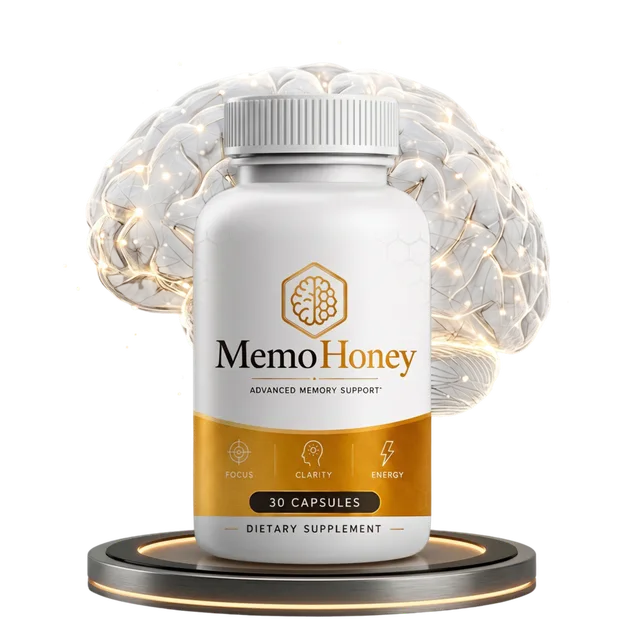
MemoHoney checks every box on that list, and it is the caffeine-free routine we recommend first. It is one stimulant-free capsule a day, built around L-Arginine, L-Arginine AKG 2:1, L-Citrulline HCL, L-Citrulline Malate, Niacin (B3) and Beta-Alanine, the circulation-first stack described above. The brand's "honey philosophy" sums it up well: nourish the brain daily and naturally, and let the results build, instead of chasing a twenty-minute jolt.
It is made in the USA in an FDA-registered, GMP-certified facility, priced from $49 to $79 per bottle depending on the bundle (plus a flat $19.95 shipping we verified at checkout), and every order is protected by a 60-day money-back guarantee. The maker is refreshingly honest that you should give it about 30 days before judging. The only small catches: it is sold only on the official website, and small-batch stock is not always immediate.
A note on safety: because L-Arginine and L-Citrulline support blood-vessel relaxation, anyone taking blood pressure medication, nitrates or blood thinners should talk to a doctor first, as should anyone pregnant, breastfeeding or under medical treatment. Niacin can cause a brief, harmless warm flush in some people. And if memory changes are sudden, severe or getting worse, see a healthcare provider.
Frequently asked questions
Do memory supplements work without caffeine?
Yes. Caffeine only masks tiredness for a few hours; it does not nourish memory. Caffeine-free formulas use nutrients such as L-Arginine, L-Citrulline and B vitamins that support circulation and cellular energy, and their benefit builds steadily with daily use instead of spiking and crashing.
Why choose a stimulant-free memory supplement?
Stimulant-free formulas avoid jitters, afternoon crashes and sleep disruption, they do not add to the caffeine you already get from coffee or tea, and they are easier to take every day, which is what long-term brain support really needs.
Can I still drink coffee while taking a caffeine-free memory supplement?
Most people can. A stimulant-free formula does not stack extra caffeine on top of your morning cup, so it is easy to fit into an existing routine. Many people find they reach for fewer afternoon coffees once their focus is steadier.
How long does a stimulant-free memory supplement take to work?
Expect a gradual build rather than a jolt. Many makers suggest giving it about 30 days before judging, with the fullest effect after two to three months of consistent daily use. A money-back guarantee lets you test that window without risk.
Who should talk to a doctor before taking a nitric oxide memory formula?
Because L-Arginine and L-Citrulline support blood-vessel relaxation, anyone taking blood pressure medication, nitrates or blood thinners should check with a doctor first, as should anyone who is pregnant, breastfeeding or under medical treatment.
The bottom line
Caffeine is a great tool for a single tired morning, but it is a poor foundation for long-term memory. A stimulant-free formula works on a different principle: steady nourishment for circulation and cellular energy, with no jitters, no crash and no hit to your sleep. Give it a few weeks, pair it with movement and good sleep, and let the results build. If you want our first pick for that routine, it is MemoHoney, and you can see today's bundles on the MemoHoney overview page.